Some summers, smoke from distant wildfires drifts into northern Utah and settles in for days. Shutting the windows helps, but it does not stop wildfire smoke indoors on its own. Fine particles slip through gaps and fresh-air paths, then linger in the air you breathe. Home Performance Pros works on heating, cooling and air quality systems in Bountiful and across northern Utah. Here is how smoke gets inside, and which filters, fan settings and air cleaners actually help.
How Wildfire Smoke Gets Into a Closed House
Smoke is a mix of gases and microscopic particles, and EPA identifies those fine particles as the biggest health threat in smoke (EPA: Wildfires and Indoor Air Quality). The particles are small enough to ride air currents instead of settling out.
EPA describes three ways outdoor air enters a home. The first is natural ventilation through open windows and doors. The second is mechanical ventilation, such as bath fans, range hoods or an HVAC system with a fresh-air intake. The third is infiltration through small cracks, joints and gaps around closed windows and doors.
Exhaust fans matter more than most people expect. All the air a fan pushes outside has to be replaced, so outdoor air leaks back in through the gaps. On a smoky day, that makeup air carries smoke with it. A closed house slows the exchange, but whatever wildfire smoke indoors does get in tends to stay until something filters it out.
Why Filter Fit and Bypass Matter
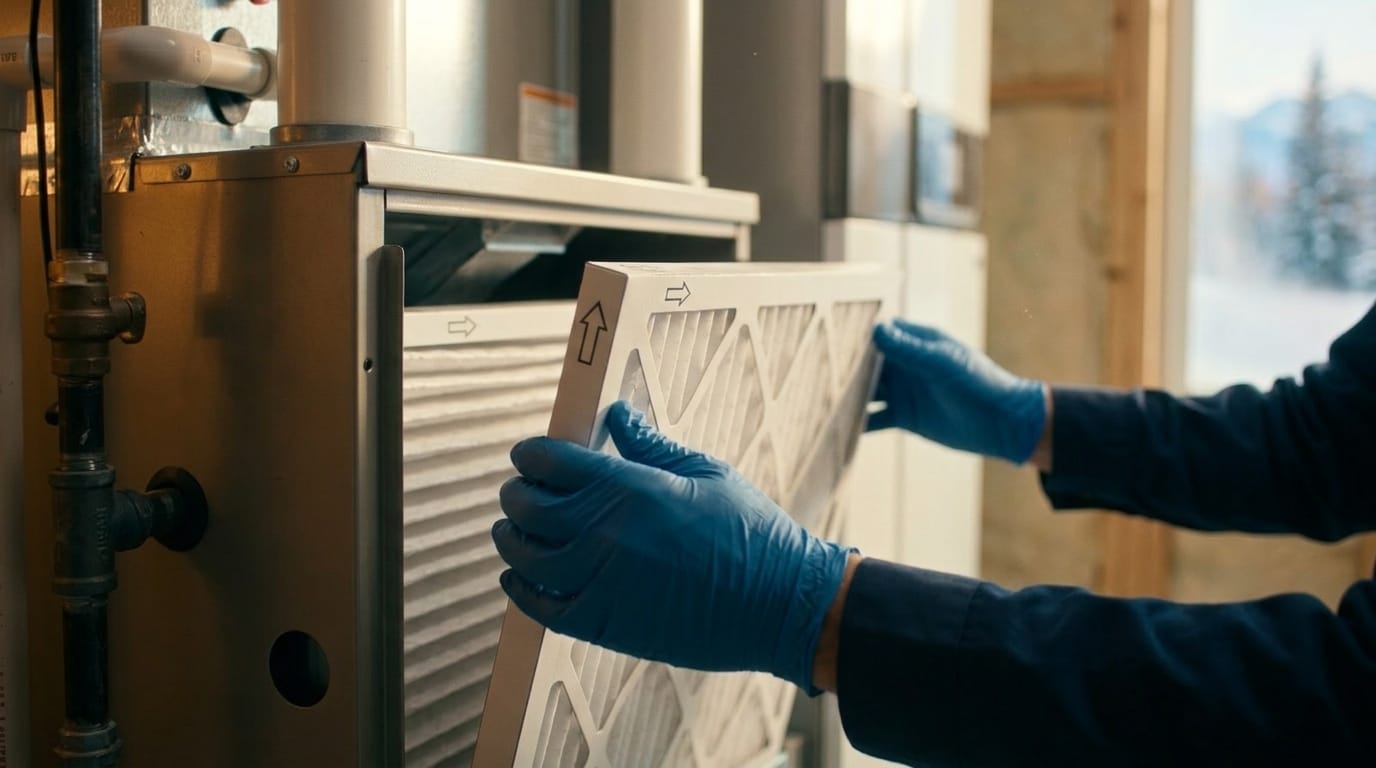
Your furnace filter is the main tool for cleaning wildfire smoke indoors, because the blower pushes the whole house’s air through it. EPA recommends a MERV 13 filter, or as high a rating as your system fan and filter slot can accommodate (EPA: What is a MERV rating?).
That limit is real. A higher-rated filter uses denser media, so it resists airflow more. If the blower cannot overcome that resistance, less air moves through the house, and the indoor coil can run too cold in cooling season.
Fit matters just as much. Air follows the easiest path, so a denser filter with gaps around its edges pushes more air around it instead of through it. That is called bypass. EPA advises making sure the filter fits snugly and not bending or crushing it to make it fit. A missing slot cover or a loose door on the filter rack creates the same leak. A thicker media cabinet holds more filter surface, which lets a system reach higher filtration with less strain.
A Bountiful Scenario You Might Recognize
Picture a family in Bountiful during a hazy week in July. The sky looks orange at sunset, so they keep every window shut and run the air conditioning. Even so, the house smells faintly of smoke, and the air looks hazy in the afternoon light.
The thermostat fan is set to Auto, so air only moves through the filter when cooling runs. The filter is a thin, low-rated one bought in a pinch. Its frame is slightly undersized, and a gap shows along one edge. The kitchen range hood runs through every meal, and the bath fans run during long showers.
This pattern points to wildfire smoke indoors that is entering faster than the system can remove it. Smoke comes in through exhaust makeup air and gaps. Meanwhile, little of the air passes through a filter that could catch fine particles, and some of it slips around the filter entirely.
Steps You Can Take on a Smoky Day
Start by checking conditions. EPA points homeowners to AirNow, its air quality site, and to local news for current smoke levels. Then work through these steps.
- Keep windows and doors closed: This slows natural ventilation, the fastest way smoke gets in.
- Set recirculate mode: If your system has a fresh-air intake, EPA advises switching to recirculate or closing the outdoor air damper.
- Run the fan On, not Auto: With a high-efficiency filter installed, EPA suggests setting the fan to On so air keeps passing through it.
- Limit exhaust fans: Use bath fans and the range hood briefly, since each one pulls in outdoor makeup air.
- Skip extra particle sources: EPA lists frying or broiling food, burning candles and vacuuming without a HEPA filter among activities that add fine particles indoors.
- Check the filter often: During heavy smoke, EPA suggests replacing filters more often than the usual schedule.
When the air quality improves, even briefly, EPA suggests opening windows to air out the house.
Portable HEPA Air Cleaners and a Clean Room
A central filter treats the whole house, but a portable air cleaner treats one room well. The two work together to limit wildfire smoke indoors where people spend the most time.
EPA’s Guide to Air Cleaners in the Home says to choose a unit with a clean air delivery rate (CADR) large enough for the room. Portable units often reach a high CADR by using a HEPA filter. The same guide warns against air cleaners that intentionally produce ozone.
EPA also describes a clean room setup. Pick a bedroom that fits the household, keep its door and windows closed, and run the air cleaner continuously on its highest setting if you can. Sleeping in that room gives everyone several hours of cleaner air each night. Some northern Utah homes use evaporative coolers, and EPA advises using those sparingly in smoke because they pull outdoor air inside.
Safety Notes
- If officials order an evacuation or fire moves close to your home, leave and follow local emergency alerts.
- If you smell smoke that seems to come from inside the house or from your HVAC equipment, get everyone outside, then call 911 from outside.
- Choose air cleaners that do not intentionally produce ozone.
- Turn the system off at the thermostat before changing a filter, and do not open electrical covers on the furnace.
- Do not run the system without a filter, and do not bend a filter to force it into a slot.
- If the house gets too hot with the windows closed, treat it as urgent and review the National Weather Service heat safety guidance.
When to Call a Professional
Some parts of smoke protection depend on how your system was built. EPA notes that you may need a professional HVAC technician to determine the highest efficiency filter your system can handle. Call for help if:
- You want a MERV 13 filter but are not sure your blower can handle it
- The filter slot leaks, has no cover or does not fit a standard size
- You cannot find or close a fresh-air intake
- Airflow drops or rooms stop cooling after a filter upgrade
- Wildfire smoke indoors still lingers with a good filter and the fan on
A technician can measure how hard the blower is working, check the filter rack for gaps and confirm what the system can support. Home Performance Pros installs high-efficiency filter upgrades and whole-home air purifiers that clean air through the ductwork. Our indoor air quality services page covers the full range of options.
Frequently Asked Questions
Does running central air bring wildfire smoke indoors?
A typical central air conditioner recirculates indoor air rather than pulling in outdoor air. Smoke only comes through the system if it has a fresh-air intake that is open.
Is a MERV 13 filter safe for my system?
EPA recommends MERV 13 or as high as your fan and filter slot can accommodate. Some systems handle it easily, while others lose airflow, so a technician can confirm.
How long should a portable air cleaner run?
During smoky conditions, EPA suggests running it as often as possible on the highest fan speed, in the room where people spend the most time.
Next Step: Get Your Bountiful Home Ready for Smoke Season
Before you reach out, check the filter you use now. Note the size and MERV rating printed on its frame, and look for gaps around the edges. Write down whether your system has a fresh-air duct, which rooms feel smoky, and whether airflow changed after any filter upgrade. Then contact Home Performance Pros to schedule a filtration check and share your notes. Until then, keep the windows closed, check AirNow and run the fan through a clean filter to keep wildfire smoke indoors to a minimum.