By Home Performance Pros
A furnace starts and stops before the house warms up when heating ends before the home’s demand has been met. Sometimes the thermostat stops asking for heat too early. In other cases, furnace controls interrupt burner operation while the thermostat continues asking. Separating those two sequences is the foundation of a useful diagnosis.
For a Salt Lake City household switching back to heating in October, several rooms may stay cool even while the furnace sounds busy. Repeated activity is not the same as effective heat delivery. The equipment must produce heat, move sufficient air and receive an appropriate control signal.
Why a furnace starts and stops before delivering enough heat
A gas furnace’s heat exchanger transfers combustion heat to circulating household air while separating that air from combustion gases. The blower then sends warmed air through supply ducts.
If air movement is restricted, heat can build inside the furnace rather than being delivered properly. The high-limit switch is a temperature-related protective control. It can stop the burners when conditions become too hot, leaving the fan running to remove heat.
A loaded filter or obstructed return path can contribute to that situation. So can blower problems or duct restrictions. Replacing a protective switch without establishing why it opened can leave the actual problem in place.
Trane’s short-cycling guidance identifies several possible causes. A furnace repair assessment should use the actual operating sequence rather than choose a part from the symptom.
The thermostat may be ending the call normally
The thermostat measures conditions at its own location. If a warm supply register, sunlight or another heat source influences that location, the thermostat can reach its setting before the bedrooms do.
An oversized furnace can also deliver heat rapidly near the thermostat while distribution leaves other areas behind. Equipment sizing is a whole-home question that requires assessment; a brief cycle alone does not establish oversizing.
A technician can compare thermostat demand with burner shutdown. If the call ends at the thermostat, the control location and distribution need review. If demand continues but the burners stop, the furnace’s controls and safety sequence deserve attention.
ENERGY STAR’s home guidance considers equipment and building conditions together. That approach matters because a room-temperature difference may be influenced by ducts, air leakage and insulation as well as the furnace.
Compare a cold bedroom with an interrupted burner
Imagine a hypothetical Salt Lake City home where the hallway reaches the thermostat setting quickly. A bedroom at the end of a duct branch remains cool. The furnace stops because the thermostat is satisfied. Extending the heat call may warm the bedroom while overheating the hallway, so the distribution problem remains.
In another home, the thermostat still shows a temperature below its setting. Warm airflow stops, but the blower continues. After cooling, the furnace starts heating again. That pattern points toward an interruption within the heating sequence.
The difference is important: one system follows a completed control request, while the other cannot sustain the requested heat. Neither is solved reliably by repeatedly raising the setpoint.
Home Performance Pros’ heating maintenance information provides context for routine equipment care. An active failure to sustain heating, however, needs assessment of the current fault.
Professional tests when a furnace starts and stops repeatedly
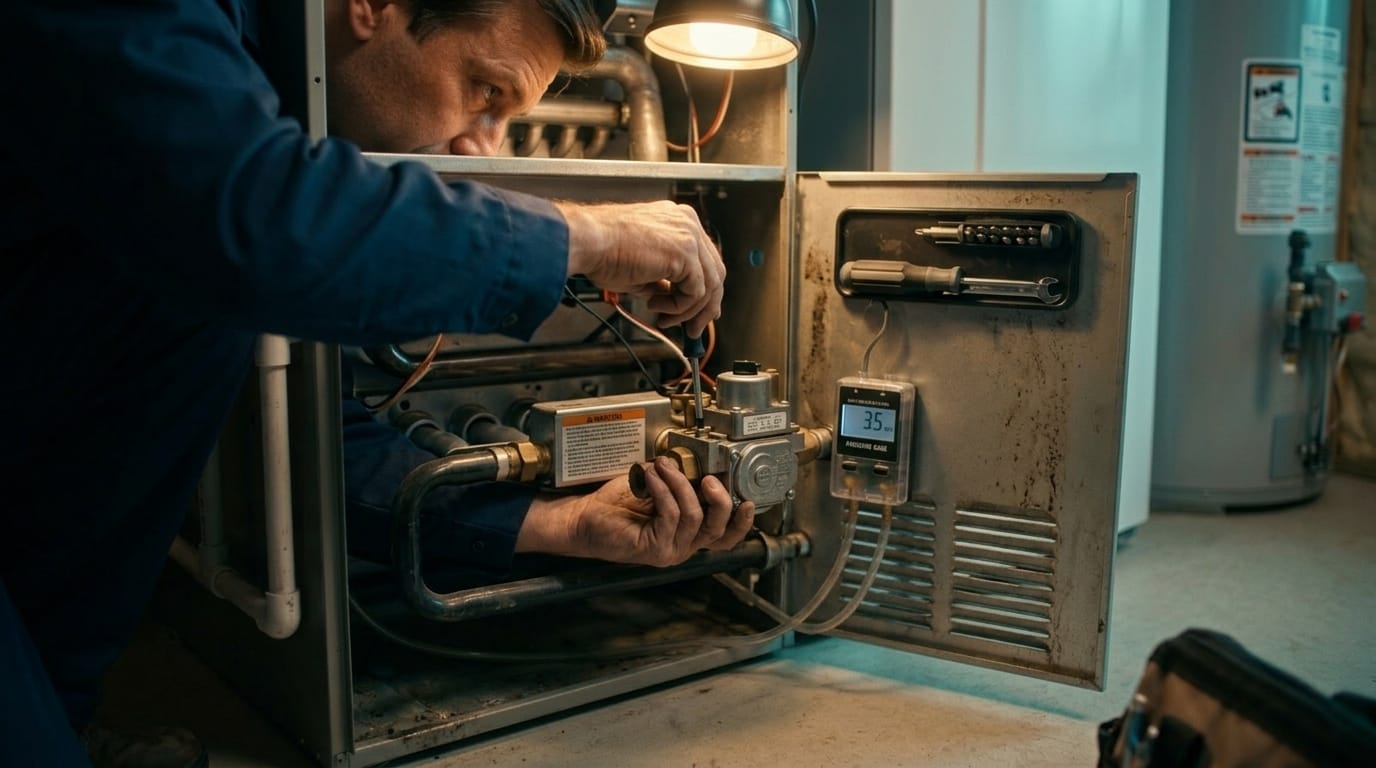
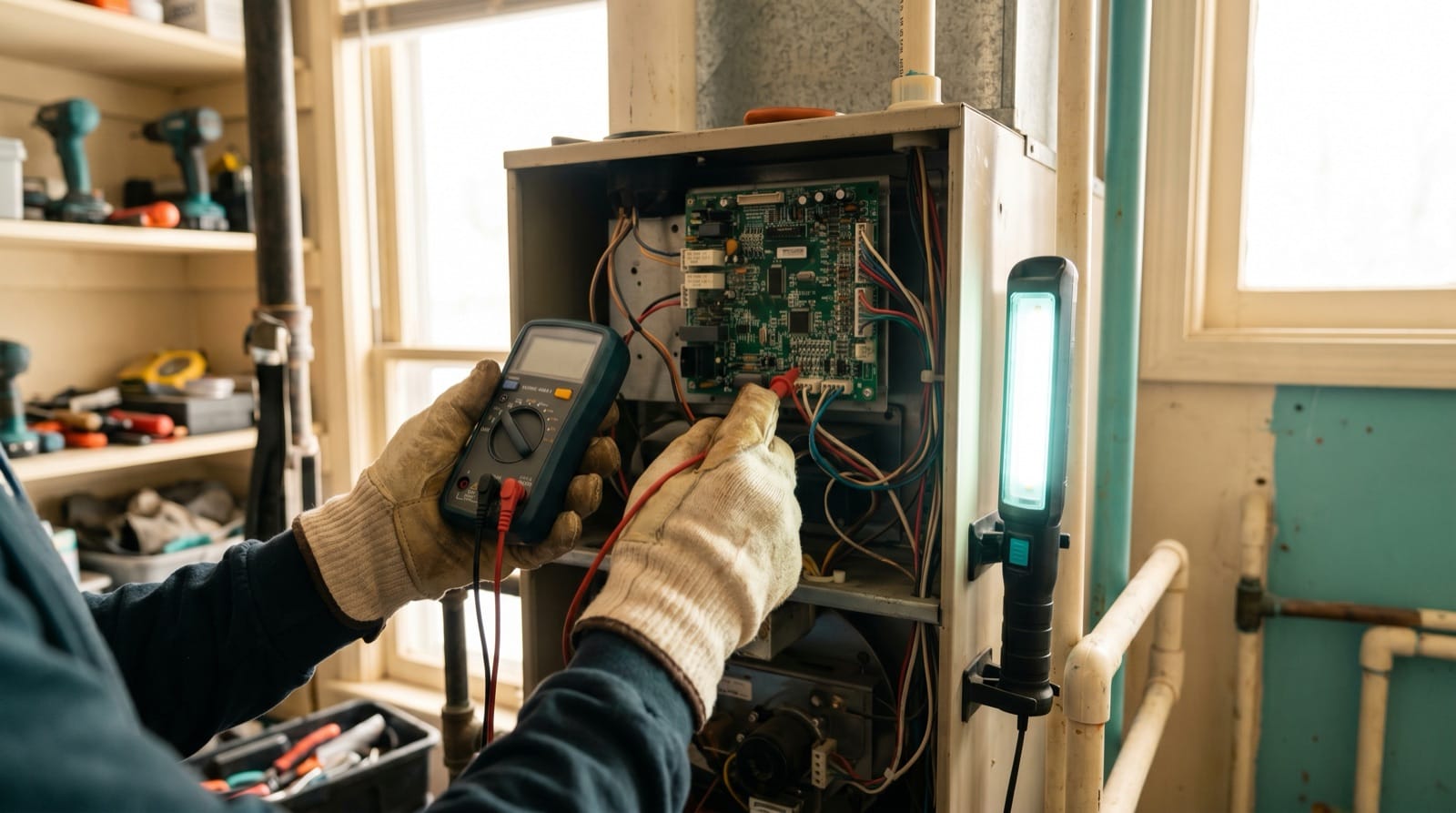
A technician may evaluate temperature rise, which is the change between air entering and leaving the furnace, against the equipment specifications. Static-pressure measurements assess resistance through the air path. Burner and control checks help identify where the sequence stops.
These measurements connect room comfort to the physical process inside the equipment. They are more useful than assuming every cycling complaint calls for a thermostat replacement.
If a furnace starts and stops in your Salt Lake City home, keep the observation separate from internal testing:
- Check the displayed temperature and heating setting to see whether the thermostat still requests heat when the burners stop.
- Keep accessible return grilles clear of furniture and follow the equipment manual for any permitted filter replacement.
- Describe whether rooms stay cold throughout ordinary heating or whether the hallway warms before the rest of the house.
A furnace that repeatedly shuts down before satisfying the thermostat needs a professional, especially when airflow weakens or the pattern changes after filter replacement. Do not bypass the high-limit switch, remove combustion panels or alter gas settings; protective controls guard against overheating and unsafe operation.
Leave the building and seek emergency help if a gas odor or carbon monoxide alarm occurs. EPA’s carbon monoxide information describes why combustion concerns must be treated separately from ordinary comfort troubleshooting.
Contact Home Performance Pros to schedule a furnace assessment when repeated cycles leave the home below its intended temperature.
Questions about a furnace that stops early
Can the fan run after heating stops?
Yes. Blower operation and burner operation are separate parts of the sequence, so airflow alone does not show sustained heating.
Would a smart thermostat correct a high-limit shutdown?
It would not remove the airflow or equipment condition causing that protective response. Diagnose the cause first.
Should a bedroom problem trigger furnace replacement?
Not by itself. Distribution, building conditions and controls may explain the room difference.
If your furnace starts and stops without warming the rooms, schedule furnace repair with Home Performance Pros in Salt Lake City. Explain whether the thermostat reaches its setting or keeps requesting heat after shutdown.