Northern Utah air is dry for much of the year, and indoor air tends to feel driest in winter, when the furnace runs the most. A whole-house humidifier not working in Ogden often goes unnoticed until static shocks start or wood trim begins to crack. The cause is usually simple: no water, no airflow or no signal from the control.
Home Performance Pros works with heating and indoor air quality systems in Ogden and across northern Utah. Here is what fails and what to check this fall.
How a Whole-House Humidifier Works
Cold outdoor air holds little moisture. When that air leaks into a house and the furnace warms it, its relative humidity drops and rooms feel drier. EPA notes that added moisture helps with winter heating nuisances such as static electricity, peeling wallpaper and cracks in paint and furniture (EPA: Use and Care of Home Humidifiers).
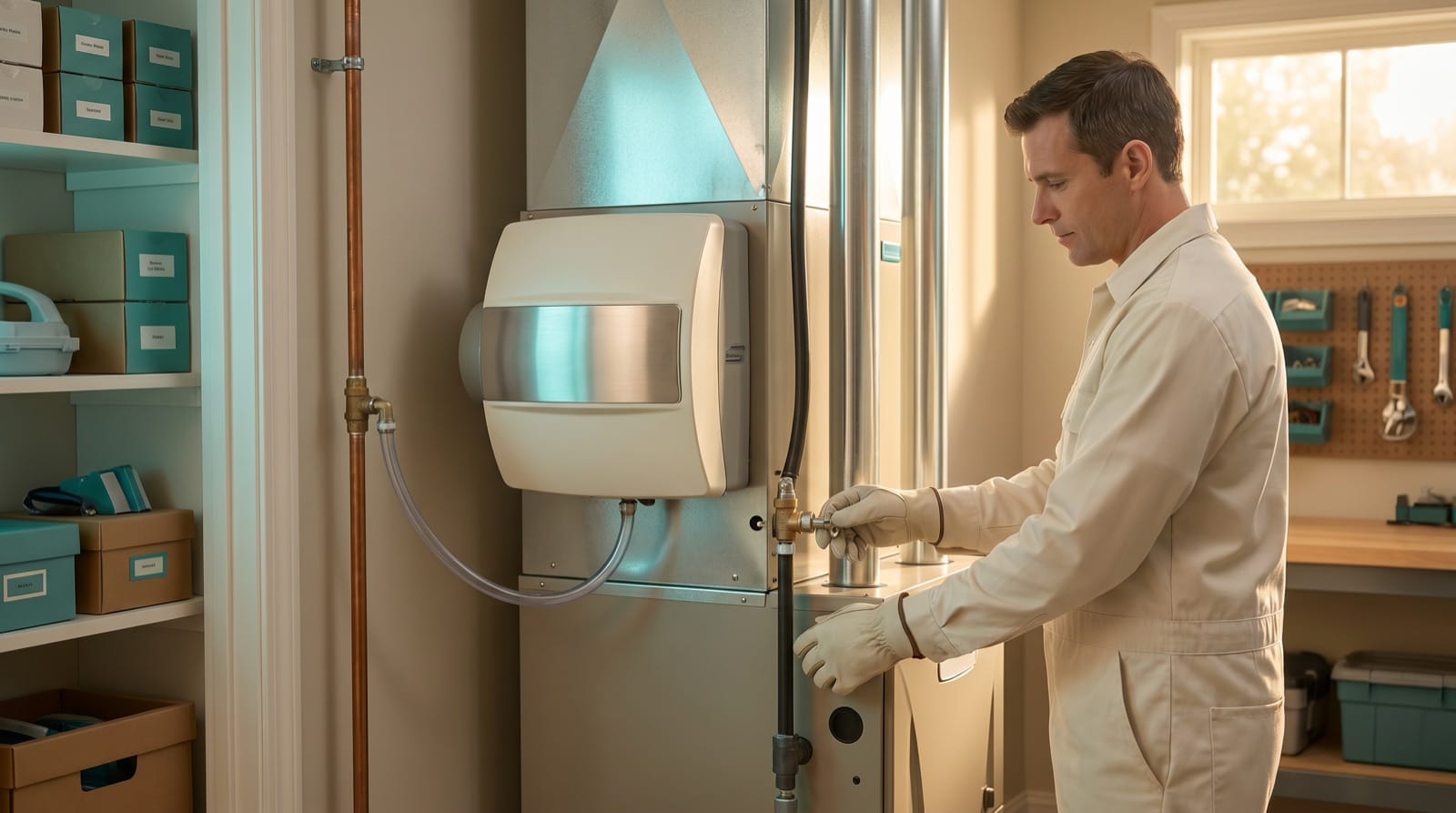
A whole-house unit mounts on the furnace ductwork. When the humidistat calls for moisture, a solenoid valve opens and water flows through a small orifice into a distribution tray. The water trickles down a water panel, also called an evaporator pad, and air moving through the panel carries moisture into the ducts. On flow-through models, water that does not evaporate leaves through a drain line.
- Bypass units: A short duct links the supply and return sides of the furnace, and the pressure difference pushes warm air through the panel.
- Fan-powered units: A built-in fan pushes air through the panel, so no bypass duct is needed.
- Steam units: An electric heating element or electrodes boil water in a canister and send steam into the ducts, without relying on furnace heat.
Scaled Water Panels and Hard Water
The water panel is a wear item. As water evaporates from it, the minerals in that water stay behind. USGS describes hard water as high in dissolved minerals, largely calcium and magnesium, and notes that hard water is common across much of the western United States (USGS: Hardness of Water).
Over a season, those minerals build a white crust on the panel. The crust fills the small pores that hold water, so water runs off the surface instead of soaking in and evaporating. The result is a whole-house humidifier not working well even though water reaches it. EPA also notes that minerals in tap water speed the buildup of scale in humidifiers.
A scaled panel feels stiff and gritty, and it may look white or stained. Follow the interval in your owner’s manual, since hard water can wear panels out faster. Steam units scale inside the canister, which needs periodic cleaning or replacement.
No Water: Saddle Valves, Orifices and Solenoids
A dry panel is the plainest sign of a whole-house humidifier not working because water never reaches it.
- Saddle valve closed: Many units tap a water pipe with a small saddle valve. It is often shut at the end of the heating season and forgotten in the fall.
- Clogged orifice: The water feed passes through a tiny brass orifice. Scale or sediment can plug it, so the solenoid opens but little water gets through.
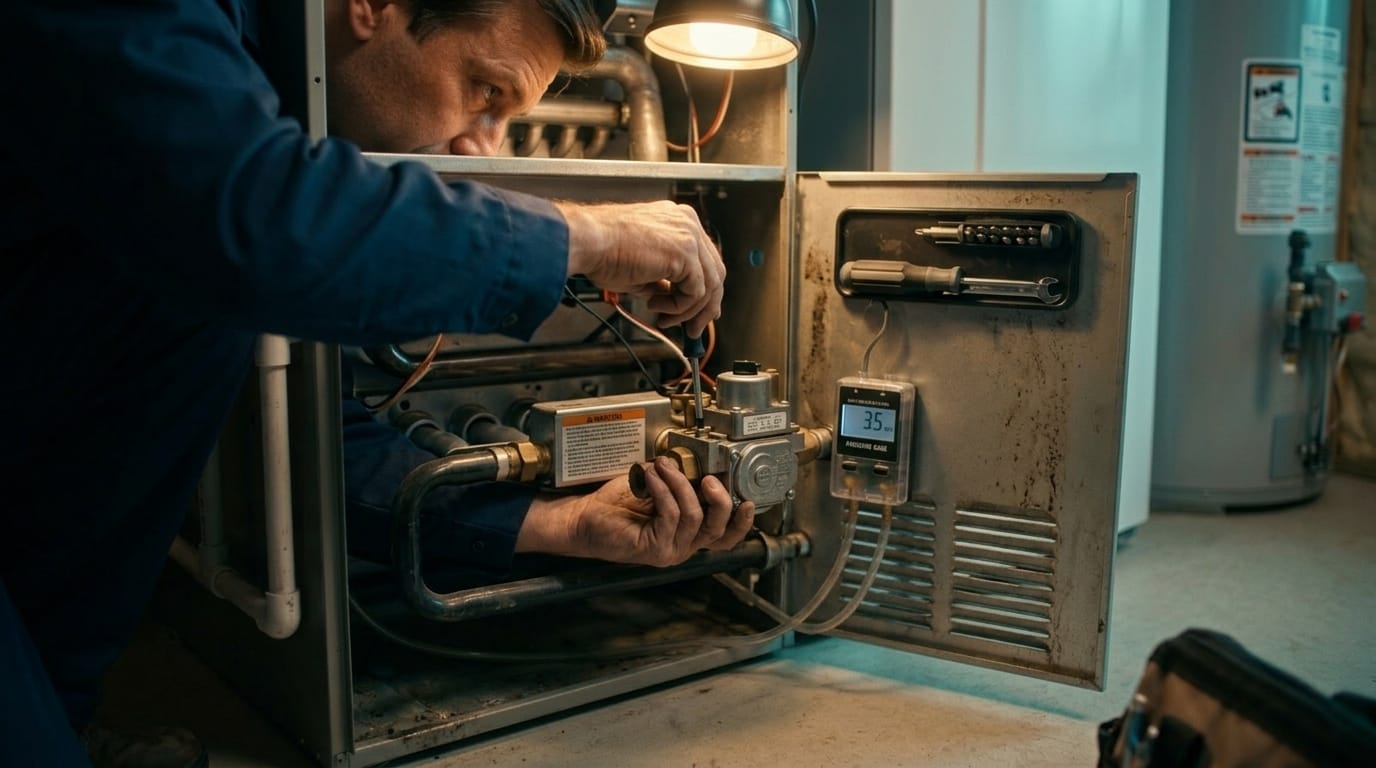
- Failed solenoid: This electric valve opens on a low-voltage signal. If its coil fails or the signal never arrives, no water flows. If it sticks open, water runs to the drain nonstop.
With the furnace heating and the humidistat turned up, look at the drain line. On a flow-through unit, water should trickle out. A dry drain line points to the valve, the orifice or the solenoid.
Bypass Dampers, Humidistats and Window Condensation
Many bypass humidifiers have a damper with summer and winter positions. It is closed during cooling season so conditioned air does not short-circuit through the bypass. If nobody opens it in the fall, air cannot flow across the panel, and the unit does nothing even with water running.
The humidistat can be the issue too. If it is set low, it never calls for moisture. Some controls lower the target automatically on cold days to limit window condensation, which can look like a whole-house humidifier not working when it is doing its job.
Set the humidistat with your windows in mind. EPA advises against humidifying above 50 percent relative humidity and says that if water condenses on windows, walls or pictures, you should lower the humidistat setting. EPA’s mold guidance suggests keeping indoor humidity ideally between 30 and 50 percent (EPA: A Brief Guide to Mold, Moisture and Your Home).
An Ogden Scenario You Might Recognize
Picture a family in Ogden a few weeks into the heating season. The furnace runs on chilly mornings, but the house feels dry. Static shocks snap from the carpet, and the humidistat sits at its usual setting, so they assume the humidifier is doing its job.
When someone opens the humidifier cover, the water panel is stiff and crusted white. With the furnace running and the humidistat turned up, the drain line stays dry, and the saddle valve on the nearby pipe is closed.
That pattern points to a whole-house humidifier not working because no water reaches it. The valve was likely shut for summer, the orifice may be partly plugged with scale, and the crusted panel will not soak up much water even once it flows.
Fall Startup Checks You Can Do Yourself
Several common causes of a whole-house humidifier not working in the fall are simple to rule out. Turn off power to the furnace and the humidifier before you start.
- Open the water: Open the saddle valve or supply valve fully.
- Inspect the panel: Replace it if it is stiff, crusted or discolored, matching the part number on the old panel.
- Set the damper: Move a bypass damper to its winter or open position.
- Check the drain: Make sure the drain line is clear, not kinked and running to a working drain.
- Check the filter: A clogged furnace filter cuts the airflow a bypass unit depends on. ENERGY STAR advises inspecting, cleaning or changing filters once a month (ENERGY STAR maintenance checklist), and the high-efficiency filters page covers choosing one that suits your system.
- Set the humidistat: Start at a moderate setting and adjust based on window condensation.
Then restore power, let the furnace heat, and confirm that water flows to the drain.
Safety Notes
- Turn off power to the furnace and humidifier before opening the humidifier.
- If water is leaking onto the furnace, close the humidifier’s water valve and call for service.
- Steam units get hot, and EPA warns that steam and boiling water can cause burns. Let the unit cool before opening it.
- Do not over-humidify. EPA notes that excess moisture can encourage mold growth in the home.
- If you smell burning or see sparks or smoke, get everyone outside, then call 911 from outside.
- If you smell gas, get everyone outside, then call 911 or your gas utility’s emergency line from outside.
When to Call a Professional
Call for help with a whole-house humidifier not working if:
- Water still does not reach the panel after you open the valve
- The solenoid hums but no water flows, or water runs to the drain nonstop
- The humidistat or its wiring does not respond
- A steam unit shows error lights or its canister needs service
- Windows fog heavily even at a low setting
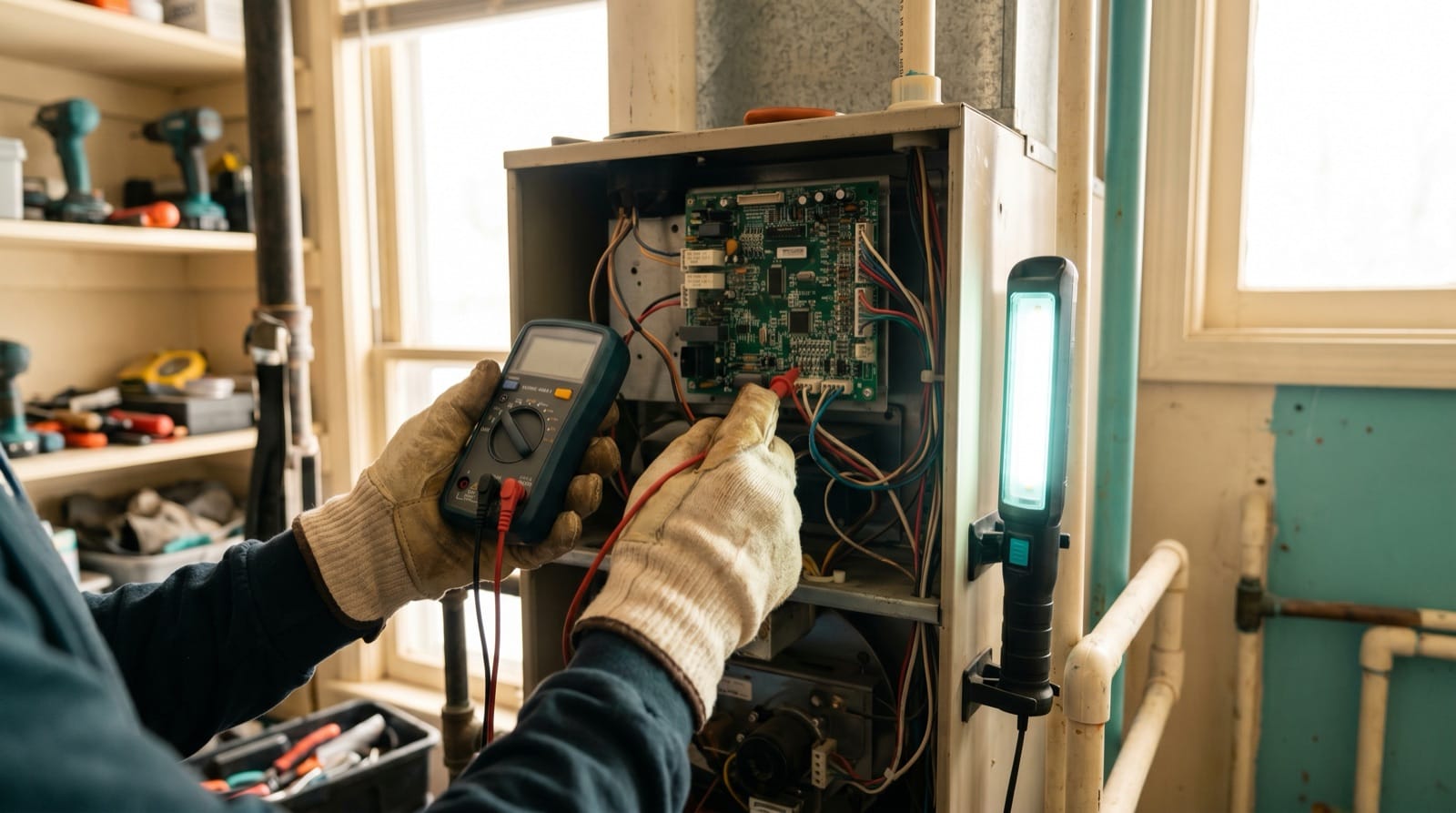
A technician typically checks the low-voltage signal to the solenoid, clears or replaces the orifice, confirms airflow through the bypass and tests the humidistat wiring. If the unit is worn out or a poor match for the home, Home Performance Pros handles whole-home humidifier installation. You can also ask about the humidifier when you book a fall furnace tune-up.
Frequently Asked Questions
Why is my whole-house humidifier not working when the furnace runs?
Check that the water valve is open, the bypass damper is in its winter position and the humidistat is set above the current indoor humidity. If all three look right, the solenoid or orifice is the next suspect.
How do I know the water panel needs replacing?
A stiff, crusty or discolored panel no longer absorbs water well. Use the interval in your owner’s manual as a starting point, and expect to replace it sooner with hard water.
Should water run out of the drain line?
On a flow-through unit, yes, while it is humidifying. Water that runs constantly, even with the humidistat turned down, usually points to a stuck solenoid.
Next Step: Get Your Ogden Humidifier Working Again
Before you reach out, gather a few details. Note the type of unit, where the humidistat is set and whether the bypass damper is open.
Check the drain line while the furnace heats, and note whether water flows, stays dry or runs nonstop. Look at the water panel and note its condition, plus any leaks or window fogging. Then contact Home Performance Pros to schedule a visit and share what you found, so the technician can start where the problem is.