The first cold morning of fall is when many households learn their heat is not ready. A furnace not turning on in Layton after a summer off usually comes down to a short list of causes, and several are simple to rule out. Home Performance Pros works on heating systems in Layton and across northern Utah. Here is how a furnace starts, what to check first and when to call.
Why a Furnace Won’t Start: The Ignition Sequence
A modern gas furnace does not simply switch on; it runs a sequence in which each step has to prove itself before the next one begins. When the thermostat calls for heat, the control board starts the inducer motor, which pulls combustion gases through the heat exchanger and out the vent. A pressure switch confirms that draft.
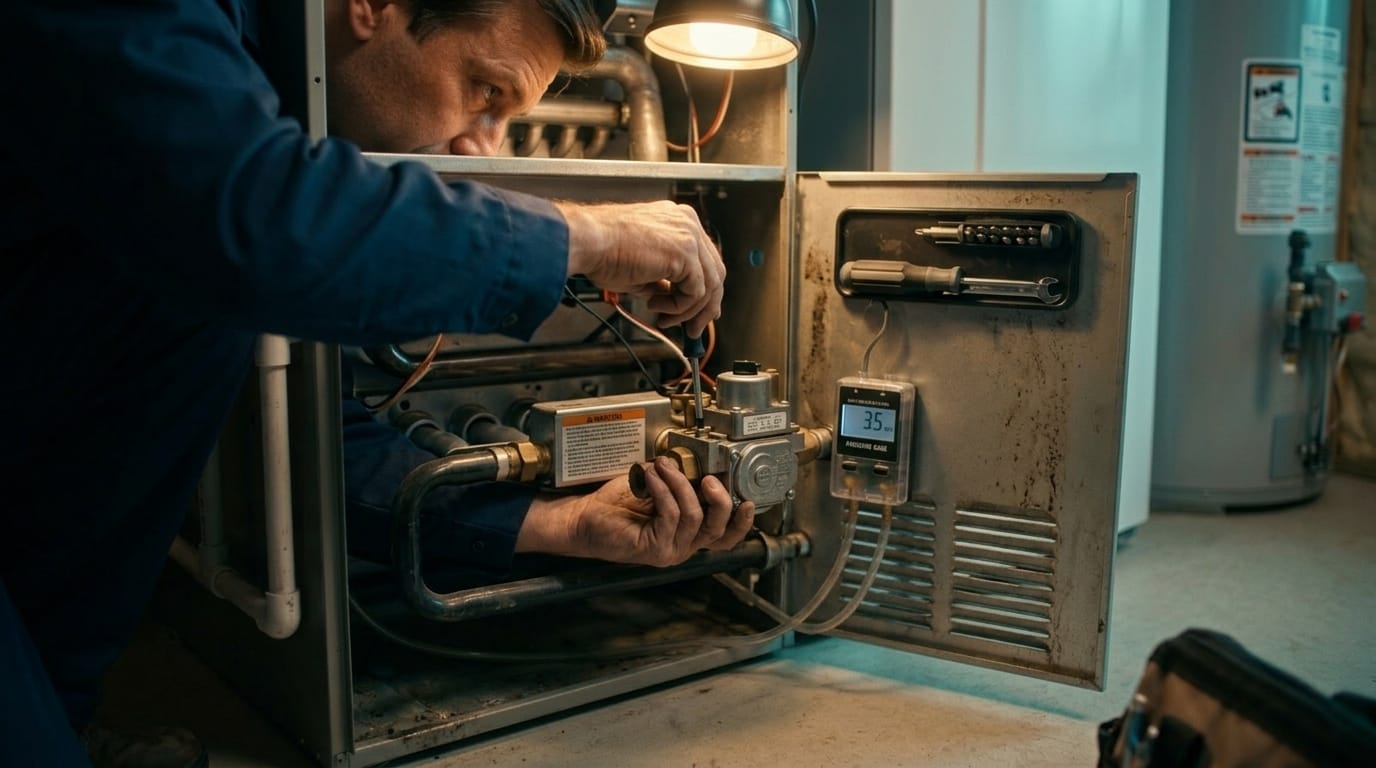
Next, a hot surface igniter glows or a spark igniter fires, and the gas valve opens. The flame sensor, a thin metal rod in the burner flame, confirms that the burners lit. Only then does the blower start.
If any step fails, the board stops the sequence for safety. That is why a furnace not turning on can have so many causes: the thermostat, power, airflow, drainage and the flame all sit in that chain.
First Checks: Thermostat, Switch, Breaker and Blower Door
A furnace not turning on is often a thermostat or power problem, so start there. Many thermostats sat in Cool mode all summer, so switch to Heat and set the temperature above the room reading. If the screen is blank, replace the batteries in battery-powered models.
A smart thermostat that loses power or Wi-Fi may stop calling for heat. ENERGY STAR advises making sure a smart thermostat is compatible with your system, and the smart thermostat installation page covers setup options.
Next, check power at the furnace.
- Service switch: Most furnaces have a switch like a light switch on or near the unit. It is easy to flip off by mistake.
- Breaker: If the furnace breaker has tripped, reset it once. If it trips again, leave it off and call.
- Blower door: The lower panel presses a door safety switch when it is seated. A panel that was bumped or put back crooked keeps the furnace from running.
A Clogged Filter and the High-Limit Switch
The blower has to move enough air across the heat exchanger to carry the heat away. When a clogged filter chokes that airflow, the heat exchanger runs hotter than designed. A high-limit switch senses that heat and shuts the burners off to protect the equipment.
The result can look like a furnace not turning on, or one that runs briefly and quits. The blower may keep running while the switch cools and resets, and on some boards repeated trips lead to a longer lockout.
Hold the filter up to a light. If you cannot see through it, replace it with the size printed on the frame. ENERGY STAR recommends inspecting, cleaning or changing filters once a month and warns that a dirty filter can damage equipment (ENERGY STAR maintenance checklist).
Ignition Lockout, Blink Codes and the Flame Sensor
When the furnace fails to light several times in a row, the control board goes into ignition lockout. It stops trying so gas does not flow without a confirmed flame. Many boards retry after a set period, but the house keeps cooling while you wait.
Behind a small window in the blower door, the board reports what it saw: an LED blinks in a pattern, and a code chart is usually printed inside the door. Write the pattern down before you turn anything off, because cutting power clears the code on many boards.
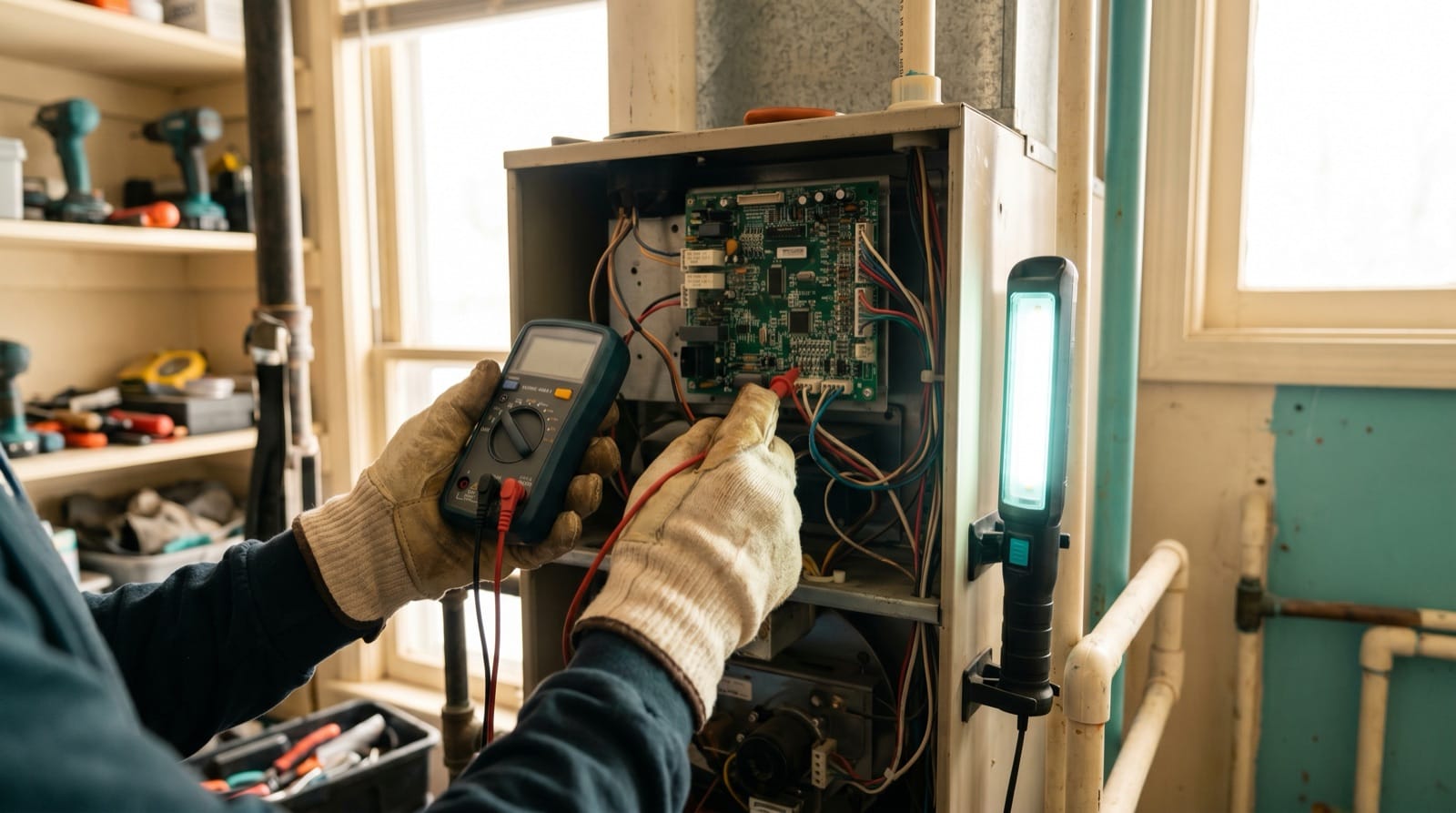
A dirty flame sensor is a common cause of repeated lockout. The rod slowly picks up a thin coating that weakens the tiny electrical signal the board reads through the flame. The burners light, the board cannot confirm the flame, and it closes the gas valve within seconds. Cleaning the sensor means working in the burner compartment, so leave it to a technician.
Condensate Traps, Pilot Lights and Gas Valves
High-efficiency furnaces pull so much heat from the exhaust that water condenses inside them. That water drains through a condensate trap to a floor drain or a small pump. If the trap clogs or the pump fails, water backs up and the pressure switch cannot prove draft. The result is a furnace not turning on even with power and gas available. Look for water on the floor or a pump that does not run.
Older furnaces may use a standing pilot, a small flame that stays lit to light the burners. If it went out over the summer, or the gas control knob was set to Off or Pilot, the burners cannot light.
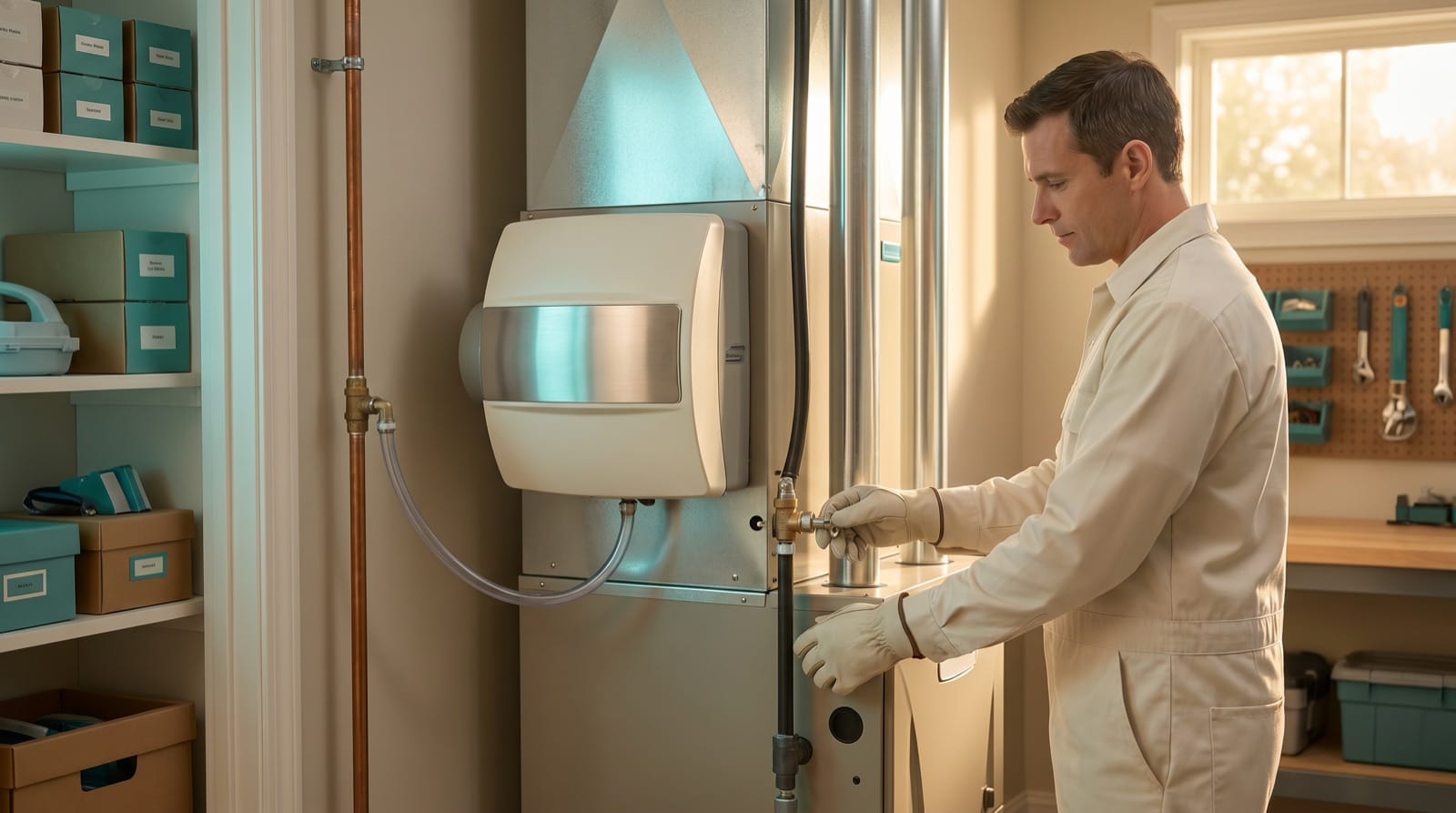
Also check the manual shutoff valve on the gas line near the furnace. On most quarter-turn valves, the handle lines up with the pipe when open. Relighting steps are printed on a label inside the furnace. If they are unclear, or the pilot will not stay lit, stop and call.
A Layton Scenario You Might Recognize
Picture a family in Layton on a chilly morning in early October. Someone switches the thermostat from Cool to Heat and turns it up. In the basement, the furnace hums as the inducer motor starts, a click follows, and the burners light. A few seconds later the flames go out, and after repeated attempts the furnace goes quiet.
A small light now blinks behind the window in the lower panel. The thermostat is set correctly, the service switch is on, and the filter looks clean. This pattern points past power and airflow. Burners that light and then drop out usually mean the board cannot confirm the flame. A dirty flame sensor is a likely suspect, and the blink code narrows it further.
Safety Notes
- If you smell gas at any point, get everyone outside, then call 911 or your gas utility’s emergency line from outside.
- If a carbon monoxide alarm sounds, get everyone outside, then call 911 from outside. EPA lists leaking furnaces and blocked flues among indoor carbon monoxide sources.
- If you smell burning or see smoke, get everyone outside, then call 911 from outside.
- Turn the service switch off before you remove the blower door.
- Do not bypass the door switch, the limit switch or any other safety control.
- Do not heat the house with a gas oven or range. The same EPA page lists gas stoves as a carbon monoxide source.
- If the home is getting cold while the furnace is down, treat it as urgent and review the National Weather Service cold weather safety guidance.
When to Call a Professional
Once the thermostat, power, filter and gas valve check out, the remaining causes of a furnace not turning on need tools and training. Call for help if:
- The furnace locks out again after one power cycle
- The burners light and then go out within seconds
- The blink code points to the pressure switch, igniter, flame or limit circuit
- Water keeps returning around a high-efficiency furnace
- The pilot will not stay lit, or the breaker trips again
A technician typically reads the blink code, watches the full ignition sequence and tests each safety switch. Home Performance Pros handles this diagnosis through furnace repair service.
EPA recommends a yearly professional inspection and tune-up of central heating systems, and ENERGY STAR suggests checking heating systems in the fall. A fall furnace tune-up can catch a dirty flame sensor or clogged trap before the first cold morning.
Frequently Asked Questions
Why does my furnace light and then shut off?
Usually the control board cannot confirm the flame. A dirty flame sensor is a common cause, though a poor ground or low gas pressure can do the same thing.
Is it safe to reset my furnace?
One power cycle at the service switch is reasonable after you check the thermostat, filter and blower door. If it locks out again, repeated resets only hide the real problem.
Why is my furnace not turning on after I changed the filter?
The blower door may not be fully seated, so the door safety switch keeps the furnace off. Refit the panel firmly and try again.
Next Step: Get Your Layton Furnace Running Again
A furnace not turning on is easier to diagnose when the technician knows what you already saw. Before you reach out, note the thermostat mode and setting. Listen for the inducer motor, watch for the igniter glow and note whether the burners light and then go out.
Write down the blink pattern before you cut power. Note whether the furnace has plastic vent pipes or a metal flue, and mention any water around it or a recent filter change. Then contact Home Performance Pros to schedule service and share your notes, so the visit can start where the problem is.