A thermostat not working in Murray can look like several different problems. The screen goes blank, the reading feels wrong, or the furnace starts and stops every few minutes. Early fall adds a twist, since the system switches from cooling to heating for the first time in months. Home Performance Pros works on heating and cooling controls in Murray and across northern Utah. Here is what happens behind the wall plate and what you can safely check first.
Why a Thermostat Stops Working: The Low-Voltage Circuit
A thermostat does not heat or cool anything. It is a switch that signals the equipment. A transformer in the furnace or air handler steps household power down to a low-voltage control circuit, and that power reaches the thermostat on the R terminal.
When the room needs heat, the thermostat connects R to W, and the furnace control board starts its heating sequence. A call for cooling connects R to Y for the outdoor compressor and R to G for the indoor blower. A wire on the C terminal, called the common wire, completes the circuit so a smart thermostat has steady power.
Anything that breaks that circuit leaves the thermostat not working, even when the furnace and air conditioner are healthy. Common culprits are a switched-off furnace, a loose door panel, a blown fuse or a wire knocked loose during a swap.
Blank Screen: Batteries, Breakers, Door Switches and Fuses
A blank display is the most common sign of a thermostat not working, and the cause usually sits between the wall and the furnace.
- Dead batteries: Many standard thermostats run the display on batteries, and a weak set can blank the screen.
- Tripped breaker or furnace switch: The furnace has a service switch that looks like a light switch. If it is off, or the breaker has tripped, the transformer has no power.
- Furnace door switch: Most furnaces have a push-button safety switch behind the blower door. If the panel is not seated after a filter change, the switch cuts power.
- Blown low-voltage fuse: Many furnace control boards carry a small fuse. A nicked wire or a chafed wire at the outdoor unit can short the circuit and blow it.
- Missing C wire: One state energy office notes that some smart thermostats require power at the thermostat and may need an added power supply (state energy office thermostat guidance).
Wrong Readings and Short Cycling: Placement and Settings
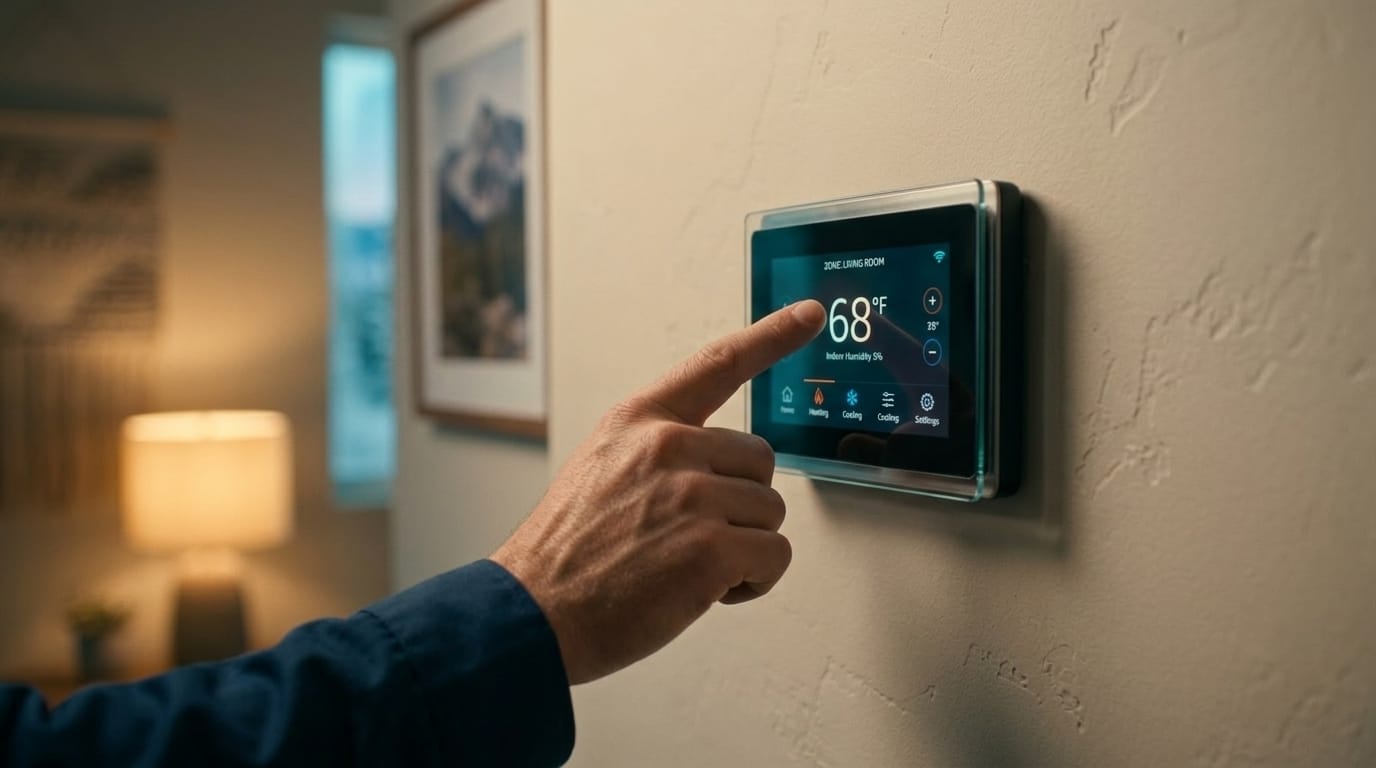
A thermostat only knows the air right around it. The same state guidance says a thermostat typically must be on an interior wall away from direct sunlight, drafts, doorways, skylights and windows. Afternoon sun on the case, a supply register blowing on it, a lamp below it or air pulled through the wire hole in the wall all skew the reading.
Placement also drives short cycling, where the system runs briefly, shuts off and starts again. A thermostat near a supply vent reaches its setpoint fast, then calls again once the air settles. Settings matter too. A cycle rate or temperature swing set too tight, or the wrong system type in the setup menu, can cause the same pattern.
The equipment can cause it as well. A furnace that overheats from a clogged filter can trip its high-limit switch and restart minutes later. That calls for furnace repair, not a new thermostat.
Heat and Cooling Not Switching Over as Fall Starts
September in northern Utah often brings warm afternoons and cooler nights, and the first heating calls expose settings nobody has touched since spring.
- Mode still on Cool: A thermostat set to Cool will not start the furnace, however cold the house gets overnight.
- Auto mode gaps: Auto changeover needs a gap between the heating and cooling setpoints. If they sit too close, the thermostat may reject them.
- Old schedules and holds: A summer schedule or a hold can override what you set at night.
- Heat pump changeover: Heat pumps use a wire on the O or B terminal to switch the reversing valve. If the setup does not match the equipment, it heats when you ask for cooling.
ENERGY STAR recommends checking the heating system in the fall, including thermostat settings (ENERGY STAR maintenance checklist).
A Murray Scenario You Might Recognize
Picture a family in Murray who swaps an old thermostat for a smart one on a Saturday in early September. The old unit ran on batteries, and nothing was connected to a C terminal. The new screen lights up and joins the Wi-Fi. A day later, it restarts on its own, and the furnace fan clicks on and off at odd times. By Monday, they have a thermostat not working at all.
In the basement, the blower door is seated and the service switch is on. A status light on the control board blinks a code, or it is dark. That pattern points to two likely causes. The smart thermostat may be drawing power through the heating or cooling wires because there is no C wire. Or a wire touched the wrong terminal during the swap and blew the low-voltage fuse.
What You Can Safely Check Yourself
A few checks rule out the simple causes of a thermostat not working before anyone opens a panel.
- Batteries and mode: Replace the batteries if your model uses them, then confirm the mode, setpoints and schedule.
- Power at the furnace: Check the breaker and the furnace service switch, and confirm the blower door is fully seated.
- A second thermometer: Set one beside the thermostat for an hour. A large gap points to a sensor or placement problem.
- The filter: A clogged filter can cause limit trips that look like thermostat trouble.
- Smart thermostat alerts: Write down any wiring or power error exactly as the screen or app shows it.
- Wi-Fi reach: ENERGY STAR advises keeping a Wi-Fi thermostat reasonably close to the router (ENERGY STAR smart thermostats).
Safety Notes
- Turn off power at the breaker or furnace service switch before you remove a thermostat from its base or touch any wires.
- Do not bypass or tape down the furnace door safety switch. It cuts power to the blower and controls while the panel is open.
- Do not replace a blown fuse with a larger one. A fuse that blows points to a short that needs to be found.
- If you smell gas or a carbon monoxide alarm sounds, get everyone outside, then call 911 or the gas utility’s emergency line from outside.
- NFPA recommends carbon monoxide alarms outside each sleeping area and on every level of the home (NFPA carbon monoxide safety).
- If the heat will not run in a cold snap and anyone at home is struggling with the cold, treat it as urgent and review the National Weather Service cold safety guidance.
When to Call a Professional
Call a technician if you still have a thermostat not working after the basic checks, or if you notice any of these:
- A blown fuse, or a control board light blinking a fault code
- A smart thermostat that restarts or needs a C wire your home does not have
- Terminal letters on the old and new thermostats that do not match
- Short cycling that continues after you rule out placement and settings
- Heating or cooling that will not start while the thermostat shows a call
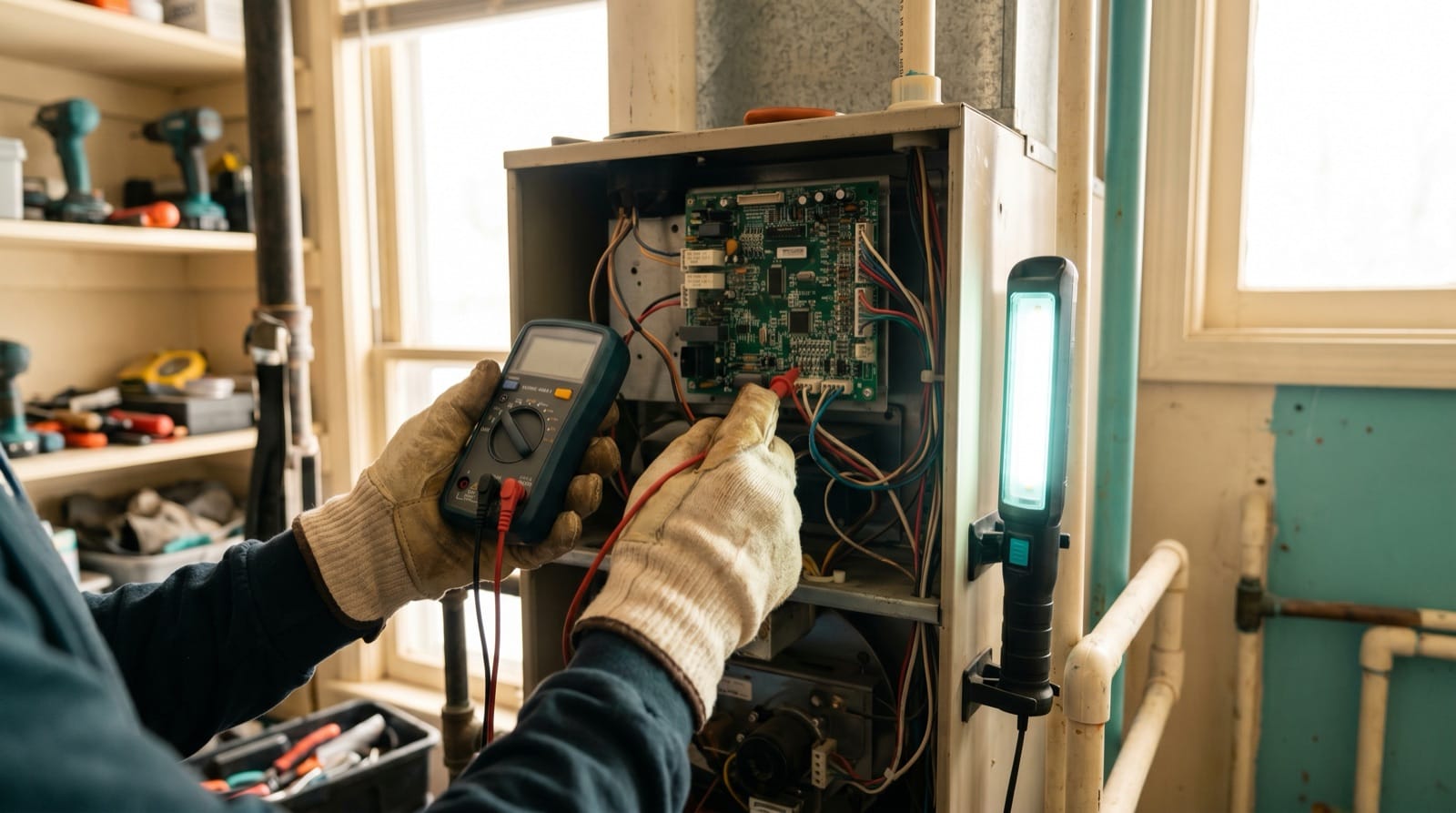
Tracing a short or a mismatched wire takes a meter and the wiring diagrams. Home Performance Pros offers smart thermostat installation for homes where a DIY swap did not go as planned. If the equipment is at fault, the next step is furnace repair or AC repair.
Frequently Asked Questions
Why is my thermostat blank after I changed the batteries?
Check the furnace service switch, the breaker and the blower door. If all three are fine, a blown fuse or a loose wire is likely, and that needs a technician.
Does a smart thermostat need a C wire?
Many do. Some models run without one, but a missing C wire can cause restarts, dropped Wi-Fi or odd cycling. Check compatibility before you buy.
Can a thermostat not working right cause short cycling?
Yes. Poor placement, a tight cycle setting or the wrong system type can all cause it.
Why won’t my thermostat switch to heat in the fall?
The mode may still be on Cool, the Auto setpoints may be too close, or an old schedule may be overriding you. Heat pump owners should also confirm the changeover setting.
Next Step: Fix a Thermostat Not Working in Murray
Before you reach out, note the thermostat model, what the screen shows and whether the trouble started after a filter change or a DIY swap. With the power off, photograph the wires and terminal letters behind the plate. Write down any blinking pattern on the furnace control board. Then contact Home Performance Pros to schedule a visit and share your notes. If you suspect a wiring short, leave the power off until then.