A heat pump that kept the house warm all winter can leave you sweating on the first hot afternoon of summer. A heat pump not cooling in West Jordan usually has a specific cause: a valve that will not shift, a thermostat setting, a refrigerant leak or a blocked airflow path. Home Performance Pros works on heat pumps in West Jordan and across northern Utah. Here is how the system cools, what goes wrong and what you can safely check.
How a Heat Pump Cools and What the Reversing Valve Does
In summer, a heat pump works just like a central air conditioner. ENERGY STAR describes a ducted air-source heat pump as a central air conditioner that also works in reverse to heat the house (ENERGY STAR: Air-Source Heat Pumps).
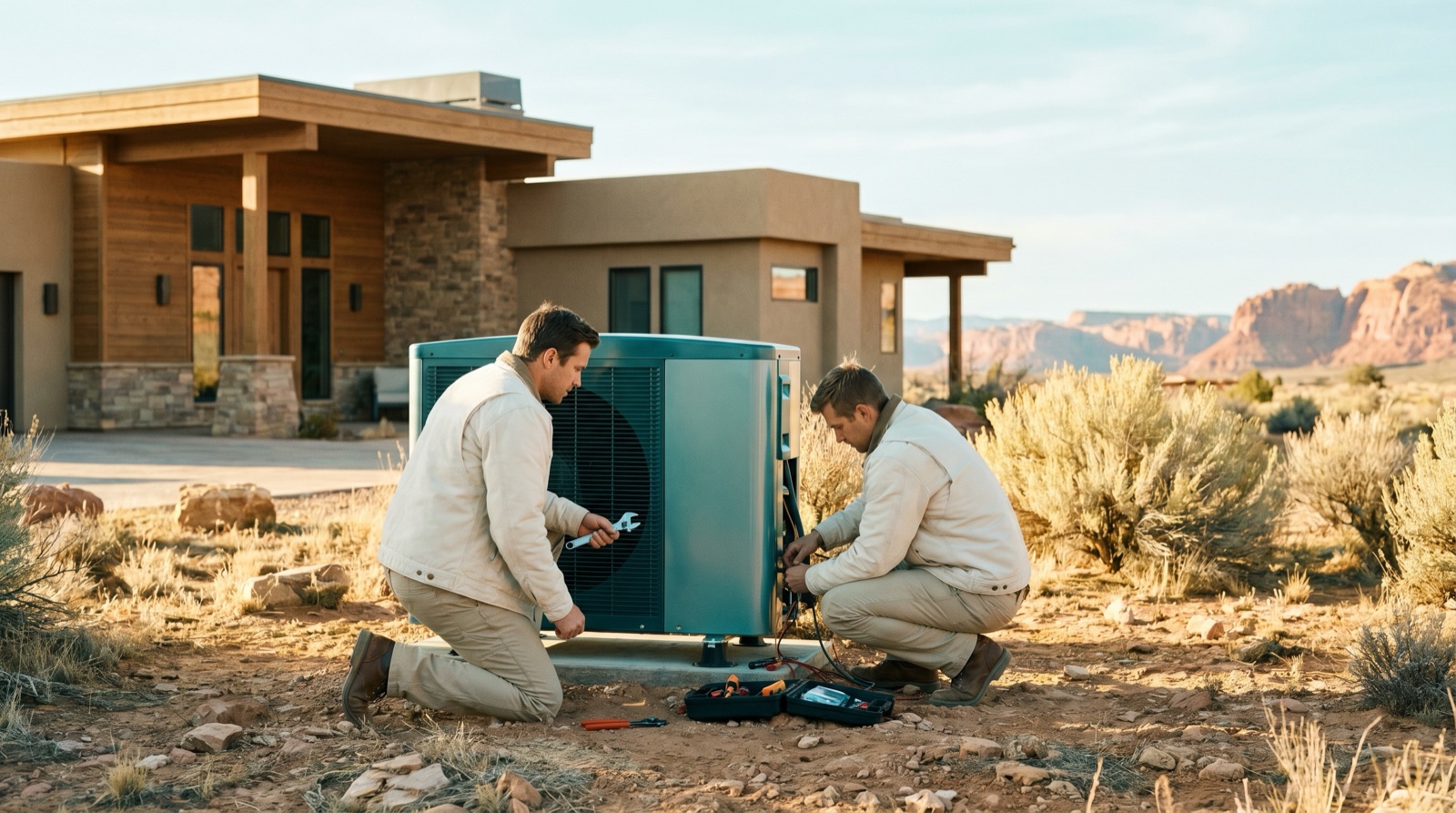
In cooling mode, refrigerant boils in the indoor coil and absorbs heat from the air the blower moves across it. The compressor in the outdoor unit pumps that heat outside, where the outdoor coil and fan release it. That is why air leaving the top of the outdoor unit feels warm in summer.
The part that makes a heat pump different is the reversing valve. This four-way valve sits near the compressor and sets which direction refrigerant flows. Flip the direction, and the indoor coil becomes the warm side instead of the cold side. A small electric solenoid coil on the valve shifts it when the thermostat sends a signal. If that shift never happens, you get a heat pump not cooling at all, running all afternoon while it heats the house.
Reversing Valve and Solenoid Problems
A reversing valve can fail in a few ways, and each leaves a heat pump not cooling for a different reason.
- Stuck in heating position: Debris or wear keeps the internal slide from moving, so warm air comes from the vents while you call for cooling.
- Stuck partway: The slide stops between positions, and refrigerant leaks from the high side to the low side inside the valve. The compressor runs, but cooling is weak and the air feels lukewarm.
- Failed solenoid coil: The coil burns out or loses its signal, so the valve never gets told to shift.
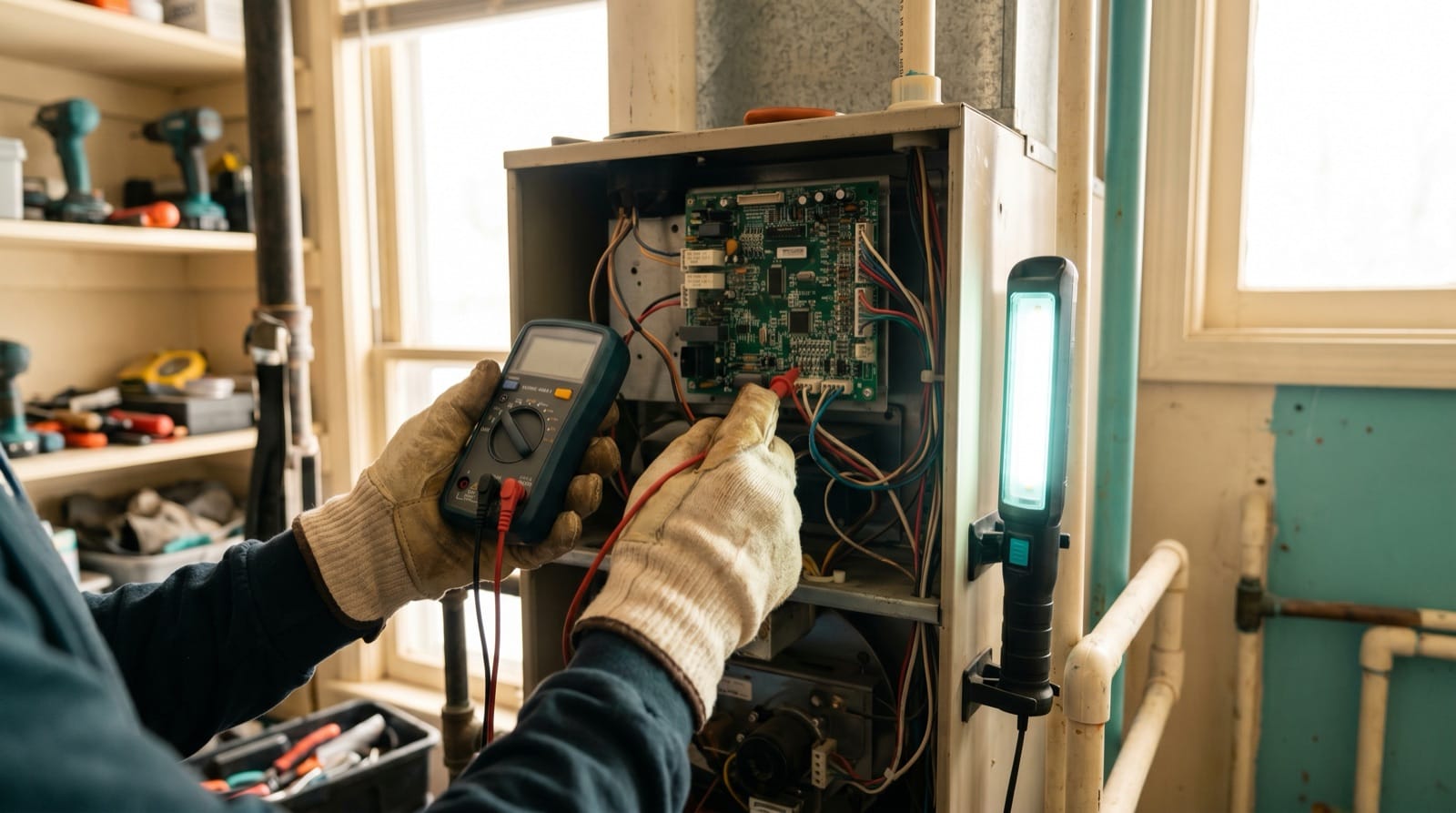
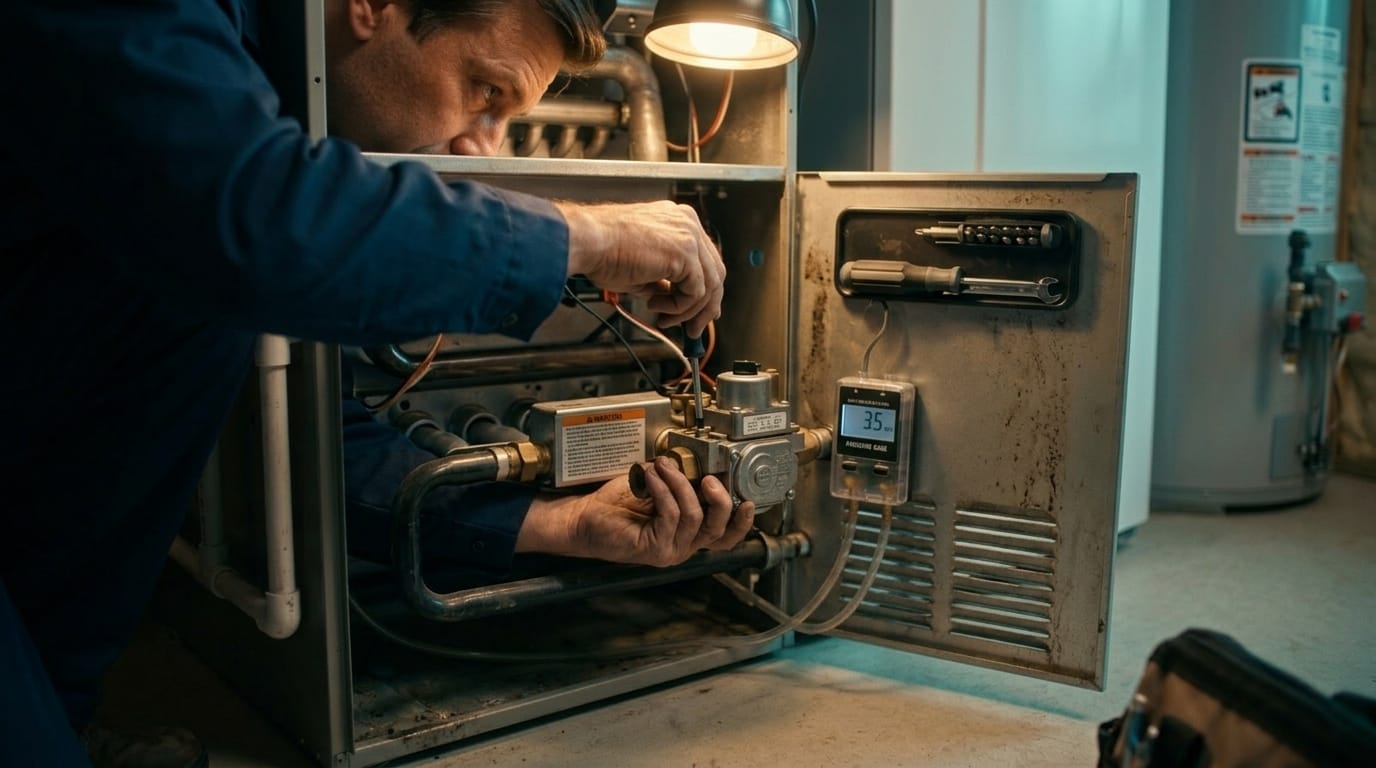
A technician tells these apart by checking for a signal at the solenoid and comparing line temperatures around the valve. A bad coil is a simple electrical repair. A stuck valve is a bigger job that means recovering the refrigerant, brazing in a new valve and recharging the system.
Thermostat O/B Settings After a Replacement
The thermostat decides when the reversing valve switches. Some systems energize the valve for cooling, which thermostats call the O setting. Others energize it for heating, called the B setting. The thermostat has to match the equipment.
When someone installs a new thermostat, the O/B choice sits in an installer menu that is easy to overlook. A wrong setting flips the logic. Cool mode produces heat, and Heat mode produces cooling. A thermostat set up for a standard air conditioner and furnace, rather than a heat pump, may never send the valve signal at all.
A wrong O/B setting is a likely suspect for a heat pump not cooling right after a thermostat swap, and it is easy to fix because the equipment itself is fine. If your thermostat was replaced since the last cooling season, check this setting before anything else.
A West Jordan Scenario You Might Recognize
Picture a family in West Jordan who installed a new smart thermostat in the spring. Mild weather meant the system barely ran for weeks. Now the first hot stretch of July has arrived, and the house keeps getting warmer.
They set the thermostat to Cool and lower the temperature. The indoor blower runs and the outdoor unit starts, so the system seems to be working. Yet the air from the registers feels warm. Outside, the air leaving the top of the outdoor fan feels cool instead of warm.
That pattern points to a heat pump not cooling because it is running in heating mode while the thermostat asks for cooling. The recent thermostat swap makes a wrong O/B setting the first suspect. If the setting matches the equipment, a failed solenoid coil or a stuck reversing valve moves to the top of the list.
Airflow, Refrigerant and Outdoor Unit Problems
Some cases of a heat pump not cooling have nothing to do with the valve. The system shifts into cooling correctly and still falls short.
- Dirty filter or coils: A clogged filter starves the indoor coil of air. ENERGY STAR advises checking filters monthly and notes that dirty coils reduce a system’s ability to cool (ENERGY STAR maintenance checklist).
- Refrigerant leak: Refrigerant circulates in a sealed loop and is not used up. A low charge means a leak, which lowers coil pressure and can let the indoor coil ice over.
- Weak capacitor: The run capacitor helps the compressor and outdoor fan motor start and run. A failing one can cause a hum while the fan sits still.
- Bad contactor: This switch sends power to the outdoor unit. Pitted contacts or insects inside it can keep the unit from starting, so the indoor fan blows air that never gets cooled.
- Blocked outdoor unit: In cooling mode, the outdoor coil has to shed the heat pulled from your house. Grass clippings, leaves or shrubs trap that heat, pressures climb and cooling drops. Follow the clearance listed in your unit’s installation manual.
Checks You Can Safely Do Yourself
Before you call about a heat pump not cooling, a few safe checks can narrow down the problem.
- Confirm the thermostat: Make sure it is set to Cool, the setpoint is below room temperature and the fan is on Auto.
- Look at the O/B setting: Following your thermostat’s own instructions, view the heat pump setting in its menu. Do not change wiring.
- Check the filter: Replace a dirty one, match the size on the old frame and never run without a filter.
- Open registers: Make sure supply vents and return grilles are open and unblocked.
- Clear the outdoor unit: With the system off at the thermostat, remove leaves and debris by hand and trim back plants.
- Check the breaker: If the outdoor unit’s breaker has tripped, do not keep resetting it.
Safety Notes
- Do not open electrical panels on the outdoor unit. Capacitors can hold a dangerous charge even with the power off.
- If you smell burning, see smoke or notice sparking at any equipment, get everyone outside, then call 911 from outside.
- Do not add refrigerant yourself. Federal rules require technicians who add or remove refrigerant to be certified (EPA Section 608 certification requirements).
- Do not spray water into the outdoor unit’s electrical compartment or poke tools through the fan guard.
- If anyone in the home is struggling with the heat while cooling is down, treat it as urgent and review the National Weather Service heat safety guidance.
When to Call a Professional
Call for help when the simple checks do not restore cooling, or if you notice any of these:
- Warm air in Cool mode with the O/B setting already correct
- Humming, clicking or a fan that will not spin at the outdoor unit
- Frost on the copper lines or the indoor coil
- A breaker that trips when the system starts
- Hissing or oily residue on the refrigerant lines
Home Performance Pros handles heat pump repair, including reversing valves, capacitors and refrigerant leaks. If a heat pump not cooling turns out to be one repair among many on an older system, a conversation about heat pump installation may make sense. For homes with a central air conditioner instead, the same airflow and electrical checks apply to AC repair.
Frequently Asked Questions
Why is my heat pump blowing warm air in cooling mode?
The system is likely running in heating mode. A wrong O/B thermostat setting, a failed solenoid coil or a stuck reversing valve are the usual causes.
Is warm air from the outdoor unit normal in summer?
Yes. In cooling mode, the outdoor fan pushes out the heat removed from your home. Cool air there during a cooling call suggests the system is heating instead.
Can I recharge the refrigerant myself?
No. A low charge points to a leak that needs repair, and federal rules limit refrigerant handling to certified technicians.
Next Step: Get Your West Jordan Heat Pump Checked
Before you reach out, write down what you notice. Note whether the thermostat was replaced recently and which O/B setting it shows. Record whether the outdoor unit runs, whether the air leaving its fan feels warm or cool, and what the vents deliver. Mention any humming, frost or tripped breakers. Then contact Home Performance Pros to schedule a heat pump diagnosis and share your notes.