It feels backward to find ice on your air conditioner in the hottest weeks of July. An AC freezing up in Sandy is not a sign the system is working hard in a good way. Ice on the indoor coil or the copper lines means something is wrong with airflow or refrigerant. Home Performance Pros works on cooling systems in Sandy and across northern Utah. Here is why the coil freezes, how to thaw it and what to check.
Why an AC Coil Starts Freezing Up in Summer
An air conditioner cools by moving heat, not by making cold. Inside the house, often on top of the furnace, sits the evaporator coil. Liquid refrigerant enters that coil at low pressure and boils into vapor, pulling heat out of the air the blower pushes across the fins. Moisture in that air condenses on the cold coil and drips into a drain pan.
Enough warm air has to cross the coil to keep its surface above the freezing point of water. When airflow drops, the coil has less heat to absorb, so it keeps getting colder. Condensate turns to frost, and frost thickens into ice. The ice blocks even more air, so a coil that starts freezing up tends to get worse over the day.
Low refrigerant causes the same result from the other side. With less refrigerant in the loop, coil pressure drops, so the coil runs colder than designed and ices over even with a clean filter.
Common Causes: Airflow and Refrigerant
Most cases of an AC freezing up trace back to a short list of problems.
- Clogged air filter: A dusty filter starves the coil of air, and ENERGY STAR advises homeowners to inspect, clean or change filters once a month and warns that a dirty filter can damage equipment (ENERGY STAR maintenance checklist).
- Closed or blocked vents: Closing basement registers to push cool air upstairs, or hiding return grilles behind furniture, cuts total airflow.
- Weak blower: A dirty blower wheel, a failing motor or capacitor, or a fan speed set too low moves less air than the coil needs.
- Dirty evaporator coil: Dust that slips past the filter coats the fins like a second clogged filter.
- Low refrigerant from a leak: Refrigerant circulates in a sealed loop and is not used up like fuel. A low charge usually means a leak at a joint, a valve or the coil itself.
A Sandy Scenario You Might Recognize
Picture a family in Sandy on a hot July afternoon. The air conditioner has run since breakfast, yet the upstairs bedrooms feel warm and the air from the vents seems weak. Weeks ago, someone closed most of the basement registers to send more cool air upstairs. The filter has not been changed since spring.
Downstairs, they notice frost on the thicker insulated copper line where it enters the coil box above the furnace. After the system cycles off, a puddle forms near the equipment. Weak airflow, frost on the larger line and water as the ice melts all point to an iced evaporator coil. The closed registers and the old filter are the first things worth checking. If both look fine, low refrigerant or a weak blower moves up the list.
How to Thaw a Frozen AC Safely
If you see frost or ice, stop cooling right away. Thawing a coil that is freezing up is simple, but it takes patience.
- Turn cooling off: Set the thermostat’s system switch to Off so the outdoor compressor stops.
- Switch the fan to On: Moving indoor air across the coil melts the ice faster than leaving everything off.
- Protect the floor: Melting ice makes a lot of water, so put towels around the furnace and watch the drain.
- Change the filter while you wait: A fresh filter rules out one likely cause before you restart.
- Let it thaw completely: Wait until no frost remains on the coil area or the copper lines, indoors and out.
Thawing treats the symptom, not the cause. If you restart cooling without learning why the AC was freezing up, the ice is likely to return.
Why Running It Frozen Risks the Compressor
It is tempting to leave the system on and hope the ice clears, but it rarely does. With the coil iced over, the refrigerant cannot pick up enough heat to fully boil into vapor. Some of it can travel back toward the outdoor unit as liquid.
The compressor is built to squeeze vapor, not liquid. Liquid refrigerant reaching it can wash away lubrication and strain internal parts such as valves and bearings. Meanwhile, the system runs nonstop while delivering little cooling.
That is how a dirty filter can grow into a major repair. Protecting the compressor is the main reason to shut cooling off at the first sign of an AC freezing up.
Checks You Can Safely Do Yourself
Once the ice is gone, a few simple checks can reveal the cause.
- Check the filter fit and type: Match the size printed on the old frame, and do not run the system without a filter. EPA suggests choosing as high a MERV rating as your system fan and filter slot can accommodate, and notes a technician may need to confirm that (EPA: What is a MERV rating?). A guide to high-efficiency filters covers that tradeoff.
- Open the registers: Open supply vents in every room, including the basement, and clear return grilles.
- Watch the drain: If the condensate line has a visible outlet, confirm water drips from it once cooling runs.
Then restart cooling and watch the larger copper line. New frost means the cause of the freezing is still there.
Safety Notes
- Set the thermostat to Off before you handle the filter. Do not open electrical covers on the furnace or outdoor unit.
- Do not chip or pry ice off the coil or lines. The fins and copper tubing are thin and can be punctured, which creates a refrigerant leak.
- Do not use a hair dryer, heat gun or any flame to speed up the thaw.
- If you see smoke, smell burning or notice sparking at any equipment, get everyone outside, then call 911 from outside.
- Do not add refrigerant yourself. Federal rules require technicians who add or remove refrigerant to be certified (EPA Section 608 certification requirements).
- If anyone in the home is struggling with the heat while the AC is down, treat it as urgent and review the National Weather Service heat safety guidance.
When to Call a Professional
Call for help if the coil ices over again after you have changed the filter and opened the vents. Repeat freezing with good airflow points toward low refrigerant, a weak blower or a dirty coil, and all three take tools and training to confirm. Also call if you notice:
- Ice on the copper lines at the outdoor unit
- A hissing sound or oily residue on the lines or fittings
- An indoor blower that does not run with the fan set to On
- A breaker that trips when the system starts
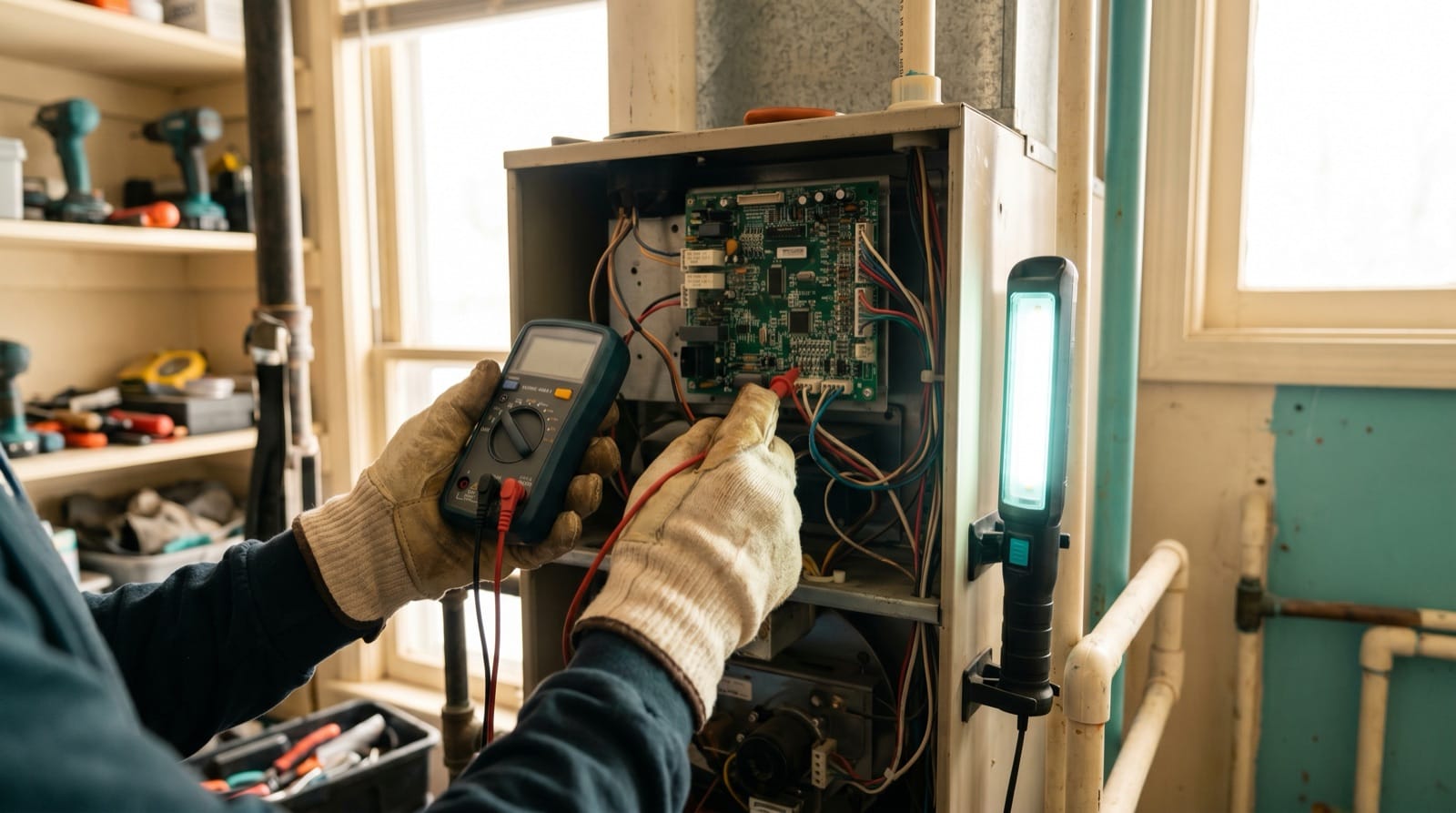
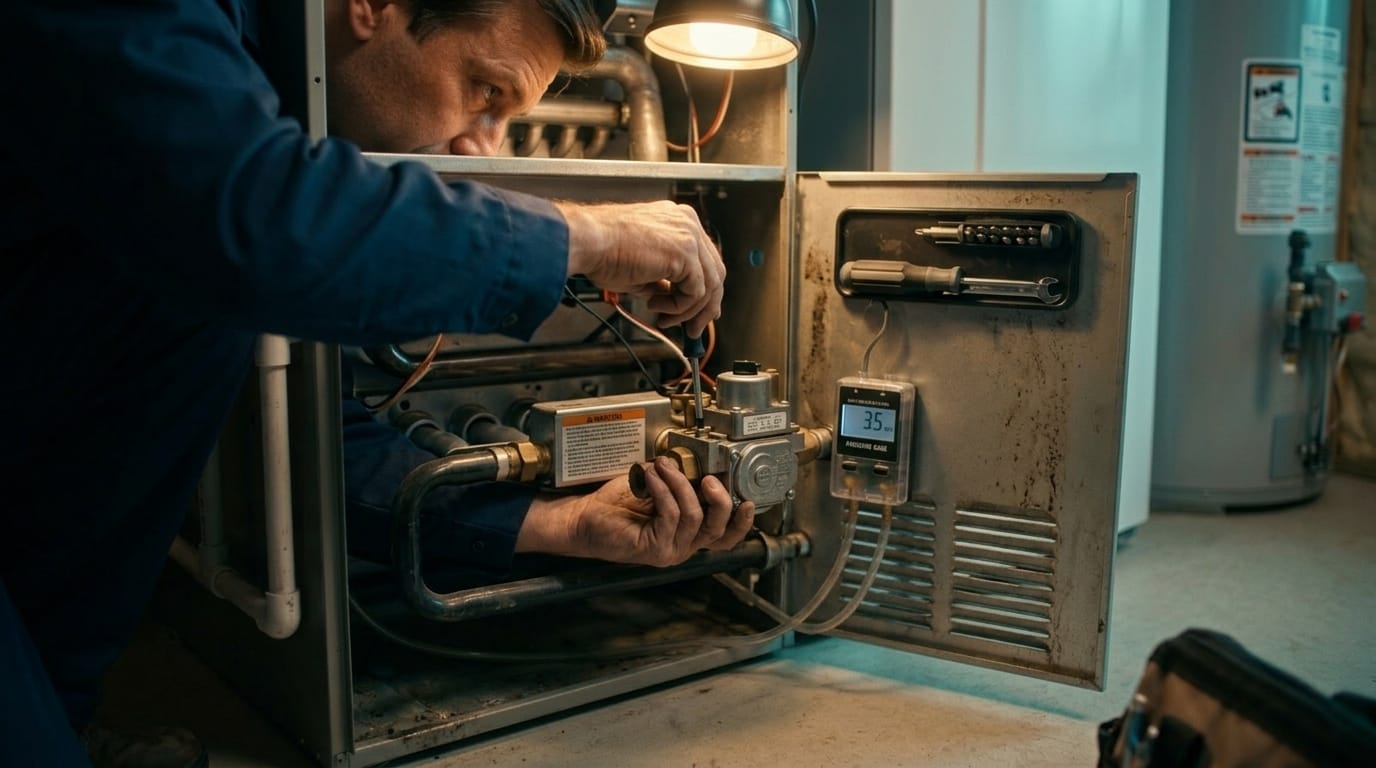
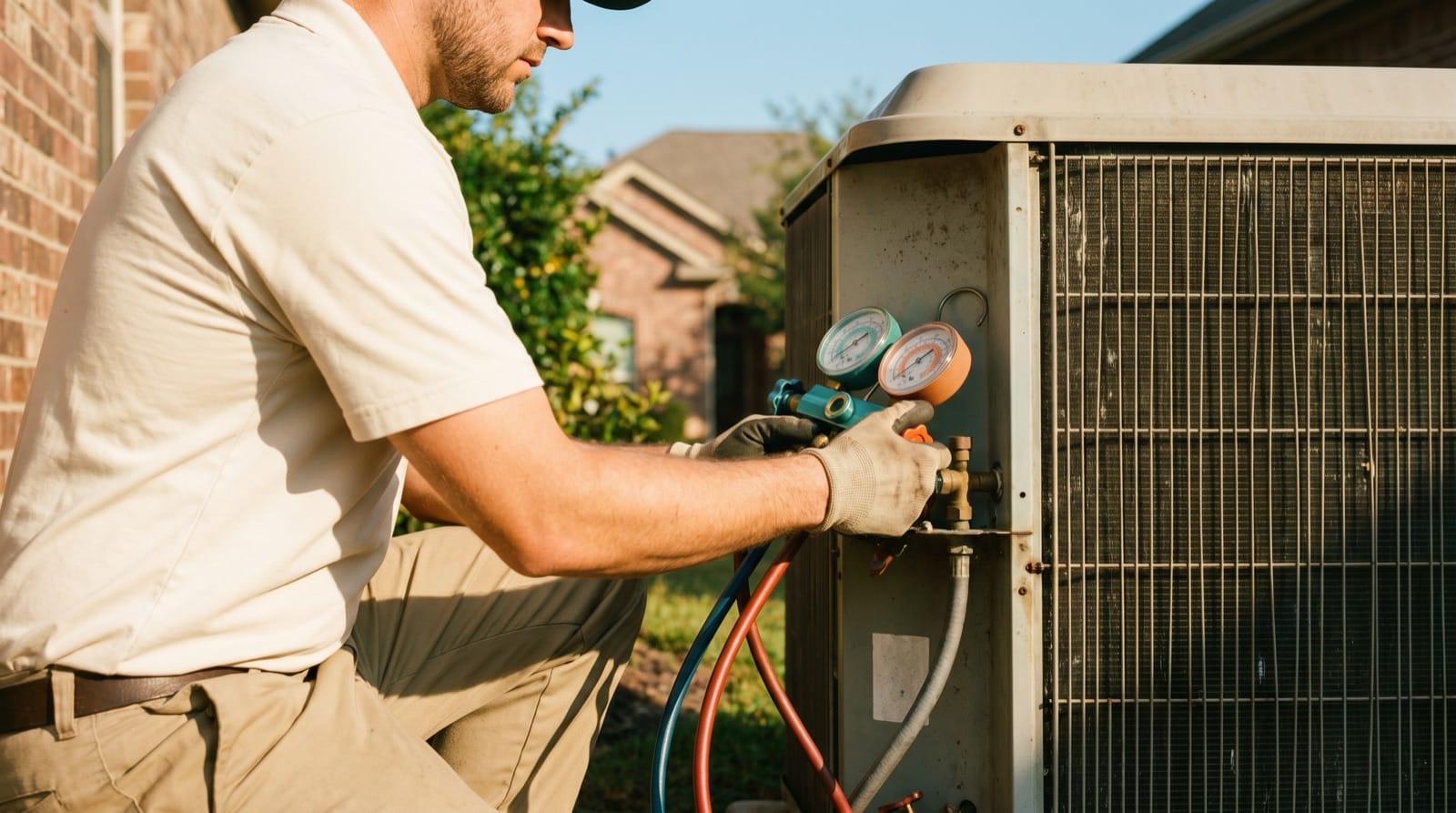
A technician typically checks the filter and blower, inspects the coil, measures airflow and reads refrigerant pressures. If the charge is low, the next step is finding the leak rather than topping it off. Home Performance Pros can trace the cause through AC repair service. A spring visit under an HVAC maintenance plan can catch dirty coils and weak blowers early.
Frequently Asked Questions
How long does a frozen AC take to thaw?
It depends on how much ice has built up. Light frost clears fairly quickly with the fan running, while a solid block takes much longer. Wait until the coil area and lines are fully clear.
Can I add refrigerant to stop it from freezing up?
No. Refrigerant is not used up, so a low charge points to a leak. Adding more without a leak repair only delays the next freeze, and federal rules limit refrigerant work to certified technicians.
Can a new filter cause my AC to freeze?
It can if the filter is too restrictive for your system’s fan or is the wrong size. Match the old frame and ask about the right MERV rating.
Next Step: Get Your Sandy AC Checked
Before you reach out, note when you first saw ice and where it formed: the coil area, the copper lines or the outdoor unit. Write down whether the filter was dirty, which vents were closed and whether the ice came back after a full thaw. Mention any water, hissing or tripped breakers. Then contact Home Performance Pros to schedule a diagnosis and share your notes. Until then, keep cooling off, and run the fan if you want air moving.